
 September
04
September
04
Tags
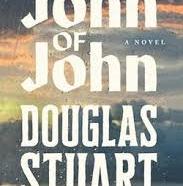
John of John by Douglas Stuart
Let’s talk about epics.
I’m talking big, immersive novels that swallow you up for, say, 500–800 pages, often following people or families across years, decades, even generations. Books so ambitious in scale and detail that they consume years of their authors’ lives and inflict a degree of physical and emotional torment likely to leave them housebound for years.
When I think about modern epics, I think about The Corrections by Jonathan Franzen, Demon Copperhead by Barbara Kingsolver, The Goldfinch by Donna Tartt, Wolf Hall by Hilary Mantel or The Covenant of Water by Abraham Verghese. And then my absolute favourite — Barkskins by Annie Proulx, who, funnily enough, we haven’t heard from since.
John of John by Douglas Stuart has the makings of an epic. Like his earlier novel, Shuggie Bain, it may lack the multigenerational sweep of some of the heavies on my list above, but whatever it lacks in breadth, it certainly makes up for in depth. Stuart digs so deeply into his characters and the places that shape them that a single life somehow carries the weight of a generation. When it comes to settings, few writers can transport you like Douglas Stuart.
It’s the late 1990s and twenty-two-year-old John-Callum (Cal) is returning home to the remote Isle of Harris after years away at university in Edinburgh. With its conservative church culture and centuries-old weaving traditions, Harris is a step back in time and Cal is returning every bit the outsider. At least he has the good sense to hide his gay porn and pop his last ecstasy tabs before he steps off the boat.
Harris is also where Cal’s father, John, still lives, singing Bible verses in Gaelic at night at the end of the steep and narrow “ribbon road” that connects their small and very much repressed community. Cal’s return is no easy homecoming, as he disappoints his father with every move in the tiny home they share with his grandmother, Ella.
Stuart hooks us in early with every key (and stubbornly flawed) character harbouring a secret they know could change everything in a place where nothing ever changes. His beautiful, sorrowful storytelling, set against his signature backdrop of damp and grey weather, will keep you writhing on the line until the very end. Side note – keep tissues handy, lots of them.
For those who prefer a break in the weather, this might not be the book for you, but the good Lord knows, I revel in it. I surrendered myself entirely to the people and places of Harris, in much the same way I imagine Douglas Stuart did in writing them.
I absolutely loved this island epic.
And that’s my 2 cents worth.

